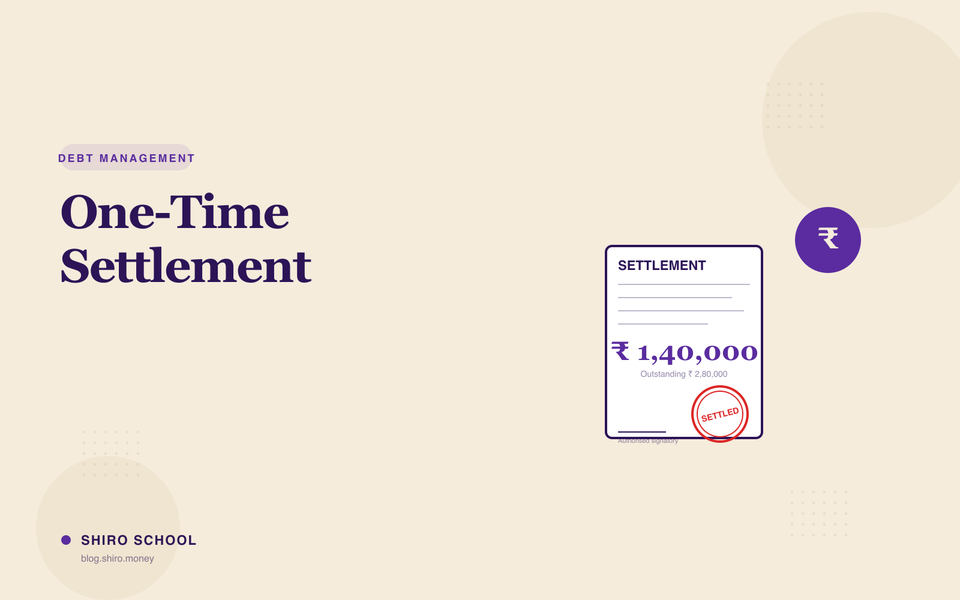
One-Time Settlement, usually called OTS, is one of the most discussed options when a borrower is under debt pressure. It is also one of the most misunderstood. Some people think settlement will clean their credit report. Some think the lender must offer it. Some think they should stop paying on purpose so the bank will reduce the amount.
These assumptions can be costly. OTS can be a useful resolution tool, but it is not a magic reset. It can reduce immediate debt pressure, but it may also leave a credit report mark that affects future borrowing.
What OTS means
In a One-Time Settlement, the borrower and lender agree that the borrower will pay a negotiated amount, usually less than the total outstanding balance. After the payment is made as per the settlement letter, the lender treats the matter as settled.
The total outstanding may include principal, interest, penal charges, collection charges, and other fees. The settlement amount may be lower because the lender decides that recovering some money now is better than spending more time and cost trying to recover the full amount later.
OTS is usually discretionary. A borrower can request it, but a lender is not automatically required to approve it. The decision depends on the lender's policy, the age of the default, the borrower's financial situation, the loan type, the amount outstanding, and whether legal action has already started.
When settlement may become relevant
Settlement is usually considered when full repayment is genuinely not possible. It may become relevant after the account has become seriously overdue or NPA, or when the lender believes normal recovery is unlikely.
That does not mean a borrower should intentionally default to become eligible. Deliberate default can damage the credit report, increase charges, create legal risk, and make the lender less cooperative. Settlement should be treated as a distress resolution route, not a shortcut.
The process in practice
A serious OTS request should be written, specific, and realistic.
A borrower or counsellor should usually include:
loan account details
current income and unavoidable expenses
reason for repayment difficulty
amount the borrower can arrange
proposed payment timeline
request for written settlement terms
The lender may review the request internally and may take time to respond. For larger accounts, approval may go through multiple levels. Collection calls can continue during this review unless the lender formally pauses them. That is why written communication matters.
If the lender agrees, they should issue a settlement letter. The letter should clearly mention the account, settlement amount, payment deadline, number of instalments if any, and what the lender will report after payment.
Do not pay without a settlement letter
This is one of the most important rules. Never make an OTS payment only because someone on the phone said the account will be closed. Ask for written terms before payment.
The settlement letter should answer:
What exact amount is to be paid?
By what date?
Is it one payment or multiple tranches?
What happens if one tranche is delayed?
Will the account be marked settled or closed?
Will a no-dues, no-claim, or settlement confirmation be issued?
After payment, keep proof of every transaction and ask for final written confirmation.
Settled is not the same as closed
This is the biggest misunderstanding. A normal closed account usually means the borrower paid the loan as agreed. A settled account usually means the lender accepted less than the full contractual amount.
Future lenders may treat these two very differently. A settled remark can signal that the borrower did not fully repay the original obligation. It may affect loan approvals, credit card approvals, interest rates, or underwriting decisions for years.
OTS may still be the right choice if the borrower cannot realistically repay the full amount and needs to stop the debt from growing. But it should be chosen with clear expectations. It resolves the immediate debt pressure; it does not automatically rebuild credit.
Common OTS myths
Myth 1: Settlement removes the problem from my credit report. Usually no. It may stop further recovery on that account, but the credit report can still show that the account was settled.
Myth 2: The bank will waive all interest. Not necessarily. Some lenders reduce interest or charges, but there is no universal rule that all interest will be waived.
Myth 3: I should stop paying to force OTS. This is risky. Strategic default can make your credit profile worse, add charges, and reduce trust with the lender.
Myth 4: Any agent can get a huge discount. Be careful. Some professionals can help negotiate properly. But informal agents who demand large upfront fees or promise guaranteed settlement should be treated with caution.
Myth 5: Settlement and restructuring are the same. They are different. Restructuring changes the repayment plan and may aim to keep the account alive. Settlement closes the matter at a negotiated amount, often with a settled credit report status.
What a counsellor should help with
A good counselling process starts with facts. Before recommending OTS, understand:
total outstanding amount
secured or unsecured nature of the loan
current DPD or default stage
borrower income and household expenses
assets and emergency obligations
whether any legal notice has been received
whether the borrower can arrange a lump sum
If the borrower cannot arrange the settlement amount within the lender's deadline, accepting the offer may create a new problem. A failed settlement can weaken credibility and may restart recovery pressure.
After settlement: the road back
After OTS, the borrower should not immediately chase new unsecured credit. The practical path is slower:
Keep all settlement documents safely.
Check the credit report after the lender's reporting cycle.
Dispute only genuine reporting errors.
Build a budget that prevents another default.
Consider secured credit products only when affordable.
Pay every future obligation on time.
Credit recovery after settlement takes time. There is no guaranteed shortcut. But borrowers can still rebuild trust by maintaining clean repayment behaviour after the distressed account is resolved.
The main lesson
OTS is neither a scam nor a clean slate. It is a negotiated compromise. It can be useful when full repayment is impossible and debt pressure has become unmanageable. But it has tradeoffs, especially for the credit report.
The right question is not "Can I get settlement?" The right question is: "Given my income, assets, legal stage, and future credit needs, is settlement the least damaging realistic option?"
That question is easier to answer with documents, written lender communication, and a calm plan.
One-Time Settlement, यानी OTS, debt pressure में फंसे borrowers के बीच सबसे ज्यादा discuss होने वाले options में से एक है। यह उतना ही misunderstood भी है। कुछ लोग सोचते हैं कि settlement से credit report clean हो जाएगी। कुछ सोचते हैं कि lender को settlement देना ही पड़ेगा। कुछ लोग जानबूझकर payment रोकने की सोचते हैं ताकि bank amount कम कर दे।
ये assumptions महंगी पड़ सकती हैं। OTS useful resolution tool हो सकता है, लेकिन यह magic reset नहीं है। यह immediate debt pressure कम कर सकता है, लेकिन credit report पर ऐसा mark छोड़ सकता है जो future borrowing को affect करे।
OTS का मतलब क्या है
One-Time Settlement में borrower और lender agree करते हैं कि borrower negotiated amount pay करेगा, जो usually total outstanding से कम होता है। Payment settlement letter के हिसाब से होने के बाद lender matter को settled मानता है।
Total outstanding में principal, interest, penal charges, collection charges और fees शामिल हो सकते हैं। Settlement amount कम इसलिए हो सकता है क्योंकि lender यह मानता है कि आज कुछ recovery करना, बाद में full recovery के लिए लंबा और costly process चलाने से बेहतर है।
OTS usually discretionary होता है। Borrower request कर सकता है, लेकिन lender को approve करना automatically जरूरी नहीं है। Decision lender policy, default की age, borrower की financial situation, loan type, outstanding amount और legal action stage पर depend करता है।
Settlement कब relevant हो सकता है
Settlement तब relevant होता है जब full repayment genuinely possible नहीं है। यह account के serious overdue या NPA होने के बाद, या lender को normal recovery unlikely लगने पर consider हो सकता है।
इसका मतलब यह नहीं कि borrower जानबूझकर default करे। Deliberate default credit report को नुकसान पहुंचाता है, charges बढ़ाता है, legal risk बनाता है, और lender को कम cooperative बना सकता है। Settlement को distress resolution route समझें, shortcut नहीं।
Process practically कैसे चलती है
Serious OTS request written, specific और realistic होनी चाहिए।
Borrower या counsellor आम तौर पर ये include करे:
loan account details
current income और unavoidable expenses
repayment difficulty का reason
कितना amount arrange हो सकता है
proposed payment timeline
written settlement terms की request
Lender request internally review कर सकता है और response में time लग सकता है। Larger accounts में multiple approval levels हो सकते हैं। Review के दौरान collection calls जारी रह सकती हैं जब तक lender formally pause न करे। इसलिए written communication जरूरी है।
अगर lender agree करता है, तो settlement letter issue होना चाहिए। Letter में account, settlement amount, payment deadline, instalments अगर हों, और payment के बाद reporting status साफ लिखा होना चाहिए।
Settlement letter के बिना payment न करें
यह सबसे जरूरी rules में से एक है। Phone पर किसी के बोलने से कि account close हो जाएगा, OTS payment न करें। Payment से पहले written terms लें।
Settlement letter से ये बातें clear होनी चाहिए:
exact amount कितना pay करना है?
किस date तक?
one payment या multiple tranches?
एक tranche delay हुआ तो क्या होगा?
account settled mark होगा या closed?
no-dues, no-claim या settlement confirmation मिलेगा?
Payment के बाद हर transaction proof संभालें और final written confirmation मांगें।
Settled और closed same नहीं होते
यह सबसे बड़ा misunderstanding है। Normal closed account usually बताता है कि borrower ने loan agreement के हिसाब से पूरा repay किया। Settled account usually बताता है कि lender ने full contractual amount से कम accept किया।
Future lenders इन दोनों को अलग तरह से देख सकते हैं। Settled remark signal देता है कि original obligation fully repay नहीं हुआ। इसका असर loan approval, credit card approval, interest rates या underwriting decisions पर सालों तक पड़ सकता है।
फिर भी OTS सही choice हो सकता है अगर borrower full amount realistically repay नहीं कर सकता और debt growth रोकना जरूरी है। लेकिन expectations clear होने चाहिए। यह immediate debt pressure resolve करता है; credit automatically rebuild नहीं करता।
Common OTS myths
Myth 1: Settlement से credit report से problem हट जाएगी। Usually नहीं। Account पर recovery रुक सकती है, लेकिन report में settled status दिख सकता है।
Myth 2: Bank पूरा interest waive कर देगा। जरूरी नहीं। कुछ lenders interest या charges reduce करते हैं, लेकिन universal rule नहीं है।
Myth 3: OTS force करने के लिए payment रोक देनी चाहिए। यह risky है। Strategic default credit profile खराब करता है, charges बढ़ाता है और lender trust कम करता है।
Myth 4: कोई भी agent huge discount दिला देगा। Careful रहें। कुछ professionals genuinely help कर सकते हैं। लेकिन जो informal agents large upfront fee या guaranteed settlement promise करें, उनसे सावधान रहें।
Myth 5: Settlement और restructuring same हैं। नहीं। Restructuring repayment plan बदलती है और account को alive रखने की कोशिश कर सकती है। Settlement negotiated amount पर matter close करता है, अक्सर settled credit status के साथ।
Counsellor किसमें help करे
Good counselling facts से शुरू होती है। OTS recommend करने से पहले समझें:
total outstanding amount
loan secured है या unsecured
current DPD या default stage
borrower income और household expenses
assets और emergency obligations
कोई legal notice आया है या नहीं
borrower lump sum arrange कर सकता है या नहीं
अगर borrower settlement amount lender deadline में arrange नहीं कर सकता, तो offer accept करना नया problem बना सकता है। Failed settlement credibility कमजोर कर सकता है और recovery pressure फिर बढ़ सकता है।
Settlement के बाद road back
OTS के बाद borrower को तुरंत नया unsecured credit chase नहीं करना चाहिए। Practical path slow होता है:
सारे settlement documents संभालकर रखें।
Lender reporting cycle के बाद credit report check करें।
सिर्फ genuine reporting errors dispute करें।
ऐसा budget बनाएं जिससे नया default न हो।
Secured credit product तभी consider करें जब affordable हो।
Future obligations हमेशा time पर pay करें।
Settlement के बाद credit recovery में time लगता है। कोई guaranteed shortcut नहीं है। लेकिन distressed account resolve होने के बाद clean repayment behaviour से borrower धीरे-धीरे trust rebuild कर सकता है।
मुख्य सीख
OTS न scam है, न clean slate। यह negotiated compromise है। Full repayment impossible हो और debt pressure unmanageable हो, तो यह useful हो सकता है। लेकिन tradeoffs हैं, खासकर credit report के लिए।
सही सवाल यह नहीं है: "क्या मुझे settlement मिल सकता है?" सही सवाल है: "मेरी income, assets, legal stage और future credit needs देखते हुए, क्या settlement सबसे कम नुकसान वाला realistic option है?"
इसका जवाब documents, written lender communication और calm plan के साथ बेहतर मिलता है।
One-Time Settlement, பொதுவாக OTS, debt pressure-ல் இருக்கும் borrowers அதிகம் பேசும் options-ல் ஒன்று. அதே நேரத்தில் இது மிகவும் தவறாகப் புரிந்துகொள்ளப்படும் விஷயமும். சிலர் settlement செய்தால் credit report clean ஆகிவிடும் என்று நினைக்கிறார்கள். சிலர் lender கட்டாயம் settlement தர வேண்டும் என்று நினைக்கிறார்கள். சிலர் bank amount குறைக்க வேண்டும் என்பதற்காக payment-ஐ जानबूझकर நிறுத்தலாமா என்று நினைக்கிறார்கள்.
இந்த assumptions costly ஆகலாம். OTS ஒரு useful resolution tool ஆக இருக்கலாம். ஆனால் அது magic reset அல்ல. அது immediate debt pressure-ஐ குறைக்கலாம்; ஆனால் future borrowing-ஐ பாதிக்கும் credit report mark-ஐ விடலாம்.
OTS என்றால் என்ன
One-Time Settlement-ல் borrower மற்றும் lender ஒரு negotiated amount-ஐ agree செய்கிறார்கள். அது usually total outstanding balance-ஐ விட குறைவாக இருக்கும். Settlement letter-ல் குறிப்பிடப்பட்டபடி payment முடிந்த பிறகு lender அந்த matter-ஐ settled என்று கருதுவார்.
Total outstanding-ல் principal, interest, penal charges, collection charges மற்றும் fees இருக்கலாம். Settlement amount குறைவாக இருப்பதற்கான காரணம்: முழு amount-ஐ நீண்ட காலம் மற்றும் அதிக செலவில் recover செய்ய முயல்வதை விட, இப்போது ஒரு பகுதி amount recover செய்வது lender-க்கு practical ஆக இருக்கலாம்.
OTS usually discretionary. Borrower request செய்யலாம், ஆனால் lender automatically approve செய்ய வேண்டிய அவசியம் இல்லை. Decision lender policy, default எவ்வளவு பழையது, borrower financial situation, loan type, outstanding amount, legal action தொடங்கியுள்ளதா என்பவற்றைப் பொறுத்தது.
Settlement எப்போது relevant ஆகலாம்
Full repayment உண்மையாக possible இல்லை என்றால் settlement relevant ஆகலாம். Account serious overdue அல்லது NPA ஆனபோது, அல்லது normal recovery unlikely என்று lender நினைக்கும் போது இது consider செய்யப்படலாம்.
அதனால் borrower intentional default செய்ய வேண்டும் என்று அர்த்தம் இல்லை. Deliberate default credit report-ஐ damage செய்யும், charges அதிகரிக்கும், legal risk உருவாக்கும், lender cooperation குறையும். Settlement-ஐ distress resolution route ஆக பார்க்க வேண்டும்; shortcut ஆக அல்ல.
Process நடைமுறையில் எப்படி இருக்கும்
Serious OTS request written, specific, realistic ஆக இருக்க வேண்டும்.
Borrower அல்லது counsellor பொதுவாக include செய்ய வேண்டியவை:
loan account details
current income மற்றும் unavoidable expenses
repayment difficulty காரணம்
arrange செய்யக்கூடிய amount
proposed payment timeline
written settlement terms request
Lender இந்த request-ஐ internally review செய்யலாம்; response வர time ஆகலாம். Larger accounts-ல் multiple approval levels இருக்கலாம். Review நடக்கும் போது collection calls தொடரலாம், lender formally pause செய்யாவிட்டால். அதனால் written communication முக்கியம்.
Lender agree செய்தால் settlement letter issue செய்ய வேண்டும். அந்த letter-ல் account, settlement amount, payment deadline, instalments இருந்தால் அவை, payment பிறகு reporting status என்ன என்பவை தெளிவாக இருக்க வேண்டும்.
Settlement letter இல்லாமல் payment செய்ய வேண்டாம்
இது மிக முக்கியமான rule. Phone-ல் யாராவது account close ஆகிவிடும் என்றதால் OTS payment செய்ய வேண்டாம். Payment முன்னர் written terms வேண்டும்.
Settlement letter இவைகளை தெளிவுபடுத்த வேண்டும்:
exact amount எவ்வளவு?
எந்த date-க்குள்?
one payment அல்லது multiple tranches?
ஒரு tranche delay ஆனால் என்ன?
account settled ஆக mark ஆகுமா அல்லது closed ஆகுமா?
Payment பிறகு ஒவ்வொரு transaction proof-ஐ பாதுகாப்பாக வைத்துக்கொள்ளுங்கள். Final written confirmation கேளுங்கள்.
Settled மற்றும் closed ஒன்று அல்ல
இது மிகப் பெரிய misunderstanding. Normal closed account என்றால் borrower loan agreement படி முழுமையாக repay செய்தார் என்பதைக் காட்டும். Settled account என்றால் lender full contractual amount-ஐ விட குறைவான amount accept செய்தார் என்பதைக் காட்டும்.
Future lenders இந்த இரண்டையும் வேறுபடையாகப் பார்க்கலாம். Settled remark, original obligation முழுமையாக repay செய்யப்படவில்லை என்ற signal ஆகும். Loan approval, credit card approval, interest rates, underwriting decisions ஆகியவற்றில் இது பல வருடங்கள் தாக்கம் ஏற்படுத்தலாம்.
இன்னும், borrower full amount realistically repay செய்ய முடியவில்லை மற்றும் debt growth நிறுத்த வேண்டும் என்றால் OTS சரியான choice ஆக இருக்கலாம். ஆனால் expectations தெளிவாக இருக்க வேண்டும். இது immediate debt pressure-ஐ resolve செய்யும்; credit automatically rebuild ஆகாது.
Common OTS myths
Myth 1: Settlement credit report-ல் problem-ஐ நீக்கிவிடும். பொதுவாக இல்லை. அந்த account recovery நிற்கலாம், ஆனால் report-ல் settled status தெரிந்துகொள்ளலாம்.
Myth 2: Bank முழு interest waive செய்து விடும். அவ்வாறு கட்டாயம் இல்லை. சில lenders interest அல்லது charges reduce செய்யலாம்; universal rule இல்லை.
Myth 3: OTS force செய்ய payment நிறுத்த வேண்டும். இது risky. Strategic default credit profile-ஐ மோசமாக்கும், charges அதிகரிக்கும், lender trust குறையும்.
Myth 4: எந்த agent-வும் huge discount வாங்கித் தருவார். Careful. சில professionals உண்மையாக உதவலாம். ஆனால் large upfront fee கேட்கும் அல்லது guaranteed settlement promise செய்யும் informal agents-ஐ கவனமாக அணுகுங்கள்.
Myth 5: Settlement மற்றும் restructuring ஒன்று. இல்லை. Restructuring repayment plan-ஐ மாற்றி account-ஐ alive வைத்திருக்க முயற்சி செய்யலாம். Settlement negotiated amount-ல் matter close செய்யும், பெரும்பாலும் settled credit status உடன்.
Counsellor எப்படி உதவ வேண்டும்
Good counselling facts-ல் தொடங்க வேண்டும். OTS recommend செய்வதற்கு முன் இவற்றைப் புரிந்துகொள்ளுங்கள்:
total outstanding amount
loan secured அல்லது unsecured
current DPD அல்லது default stage
borrower income மற்றும் household expenses
assets மற்றும் emergency obligations
legal notice வந்துள்ளதா
borrower lump sum arrange செய்ய முடியுமா
Borrower lender deadline-க்குள் settlement amount arrange செய்ய முடியாவிட்டால், offer accept செய்வதே புதிய problem ஆகலாம். Failed settlement credibility குறைக்கலாம்; recovery pressure மீண்டும் அதிகரிக்கலாம்.
Settlement பிறகு road back
OTS பிறகு borrower உடனே புதிய unsecured credit தேட வேண்டாம். Practical path மெதுவானது:
அனைத்து settlement documents-ஐ பாதுகாப்பாக வைத்துக்கொள்ளுங்கள்.
Lender reporting cycle பிறகு credit report check செய்யுங்கள்.
Genuine reporting errors மட்டும் dispute செய்யுங்கள்.
புதிய default வராத budget அமைக்குங்கள்.
Secured credit products affordable என்றால் மட்டும் consider செய்யுங்கள்.
Future obligations அனைத்தையும் time-க்கு pay செய்யுங்கள்.
Settlement பிறகு credit recovery-க்கு time தேவை. Guaranteed shortcut இல்லை. ஆனால் distressed account resolve ஆன பிறகு clean repayment behaviour வைத்தால் borrower trust-ஐ மெதுவாக rebuild செய்யலாம்.
முக்கிய பாடம்
OTS scam அல்ல; clean slate-யும் அல்ல. அது negotiated compromise. Full repayment impossible மற்றும் debt pressure unmanageable என்றால் அது useful ஆகலாம். ஆனால் tradeoffs உண்டு, குறிப்பாக credit report-க்கு.
சரியான கேள்வி "எனக்கு settlement கிடைக்குமா?" அல்ல. சரியான கேள்வி: "என் income, assets, legal stage, future credit needs பார்த்தால் settlement தான் least damaging realistic option ஆ?"
இந்த கேள்விக்கு documents, written lender communication, calm plan ஆகியவற்றுடன் நல்ல பதில் கிடைக்கும்.
Subscribe
Get practical credit guides and borrower education from Riverline.